

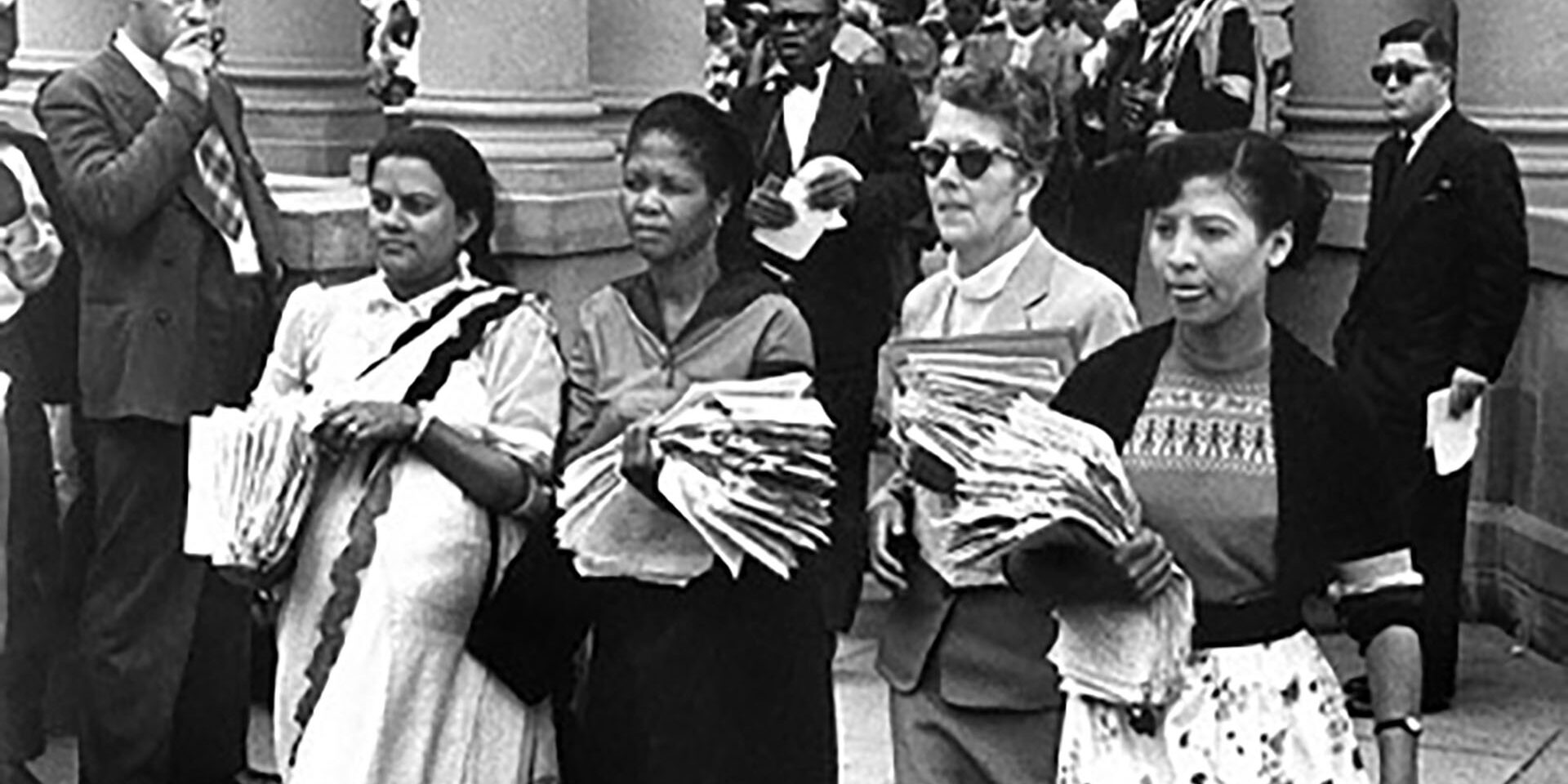
Seventy years ago, more than 20 000 women marched to the Union Buildings in Pretoria to protest the apartheid government’s plans to extend pass requirements to black women. Pass laws restricted where black people could live, work and move and their extension to black women threatened their livelihoods, family life and ability to care for their children, while subjecting them to increased state surveillance and control.
The 1956 Women’s March remains a defining moment in South African history, not only because of the scale of the protest, but because it demonstrated the central role of mothers in the liberation struggle and the political power of women’s collective action. The march has since become a lasting symbol of women’s resistance, leadership and political organising, and is commemorated annually as National Women’s Day.
Supporting Mothers is An Investment
Today, mothers continue to organise around the issues affecting their families and communities. They advocate for safer communities, better healthcare, disability rights, food security and much more. In doing so, they bring attention to issues that reach far beyond their own homes.
For many mothers, raising children, managing households and navigating government services constitute significant forms of unpaid labour. The disproportionate distribution of these responsibilities has implications for mothers’ capacity to participate in paid employment, education and broader social and economic life.
This is particularly significant in South Africa, where women headed 42.4% of households in 2024, while 45.5% of children lived with their mothers only.
The demands of care can also shape the choices mothers make about work: returning to work while still recovering from childbirth, navigating inadequate maternity protections, particularly in informal work, choosing lower-paying work because it offers greater flexibility, or turning down opportunities altogether because childcare and transport are simply unaffordable or unavailable.
Cynthia (name changed) is a 38-year-old mother living in Cape Town who has seen firsthand just how closely care work and financial security can be tied together. After separating from her husband almost a year ago, she found herself a single parent, responsible for herself and their two young children. Despite having a qualification in accounting, she spent months looking for a job before eventually finding part-time work as a domestic worker. To make ends meet, Cynthia supplements her income by reselling products at markets and running her own cleaning business.
Getting the job, however, meant finding someone to care for her children while she worked – another cost she has to factor into an already tight budget. With limited and inconsistent child support contributions from her husband and two young children to raise, every rand has to be carefully considered, from food and education to everyday necessities.
For Cynthia, earning an income and caring for her children are not separate challenges. Her ability to work depends on whether she can arrange and afford care for her children, while the money she earns must stretch to cover the very care that makes her work possible. At the same time, she is constantly having to think ahead about how she will meet her family’s needs. This constant balancing act has taken a toll on her mental health, with Cynthia reporting feeling depressed, overwhelmed and constantly tired.
Our Systems Determine What’s Possible
But it doesn’t have to be this way. Her experience illustrates how supporting mothers cannot be separated from the systems that make economic participation possible.
Evidence shows that investing in care can deliver meaningful economic and societal returns. In 2023, the International Labour Organization published modelling across 82 countries examining the potential impact of investment in care. It found that every US$1 invested in closing childcare policy gaps could generate an average US$3.76 increase in GDP by 2035. The modelling also found that investment in care could create millions of jobs and significantly increase women’s participation in paid employment.
But building a society that supports mothers requires more than investment in services and policies. It also requires investment in the women and communities working to change the systems around care.
Mamandla Magic Isn’t Divine, It’s Intentional
The Mamandla Fellowship Programme brings together women, mothers and mother-supporters committed to making South Africa a better place for mothers. Through the Fellowship, these women learn from one another, build their leadership and advocacy skills, and develop relationships that go beyond their immersion year.
At the recent graduation of the 2025/2026 cohort, what stood out was not only what the Fellows had learned throughout the programme, but what they had built with one another. This is what’s often called the “Mamandla Magic” and the result is women from different parts of South Africa and across different fields and cultural backgrounds who share resources, support one another’s initiatives, open up about their personal struggles and stand together around issues affecting mothers in their communities.
Investing in mothers’ leadership is an investment in the care ecosystem itself and it creates tangible social and economic value. When women are equipped to turn their lived experiences of care into collective action, they can lead, build stronger communities and help shape systems that work better for mothers and their children.
Care is infrastructure for women’s economic participation
When mothers are unable to participate because care is unaffordable, unavailable or unsupported, their skills, knowledge and expertise are lost not only to their families, but to their communities and the economy as a whole. We simply cannot afford to continue celebrating women’s contributions on Women’s Day without confronting what makes those contributions possible.
By Munashe Dzikiti | Digital Advocacy, Embrace