

In a recent conversation with a friend, he shared something he had heard from a leading American expert in polling and elections. The two of them had apparently gone down quite a rabbit hole exploring how analysts in the US use data, polling and statistical modelling to predict voter behaviour and the outcome of presidential elections. At the end of their conversation, the researcher offered an observation that has stayed with me since: “Campaigning is not only about persuading people to vote for you. It’s also about persuading those who would vote against you to stay home.”
This stayed with me because it captures an uncomfortable possibility in electoral politics – campaigns don’t always need to win over their opponents if they can benefit from their absence at the ballot box.
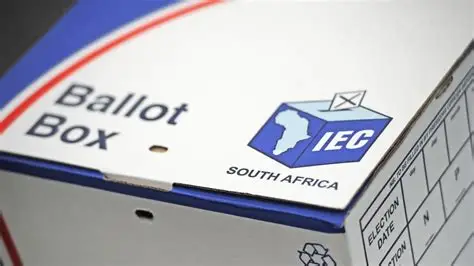
With South Africa’s 2026 local government elections a day away, and amid a profound crisis of political trust, I find myself wondering what happens when people withdraw from politics not because a campaign has persuaded them to stay home, but because years of unmet needs, broken promises and failing services have eroded their belief that participation can make a difference?
Reporting in Daily Maverick on 3 May 2026 highlighted findings from the Human Sciences Research Council’s IEC Election Research Survey, showing that trust in local government had fallen from 55% in 2004 to just 18% in 2025. An Ipsos survey conducted between December 2025 and January 2026 found that 47% of South Africans felt no political party represented their views, while only 38% believed their local government was doing its job well. These findings point to South Africans’ dwindling confidence in the ability of the democratic system to improve their lives, represent their interests and ensure that public institutions deliver on their needs.
Democracy IRL
You might reasonably be asking yourself why the challenges mothers face should matter to everyone else. After all, not everyone is a parent, and motherhood is not everyone’s lived experience. But the conditions in which children are raised, families are supported and communities function are not exclusively mothers’ concerns. They are questions about the kind of society we are building and the quality of life we want for everyone. When families struggle to access basic services and when local economies fail to create opportunities for residents to thrive, the consequences extend well beyond individual households.
Earlier this year, our Embrace Mamandla Fellows participated in a panel discussion at the Human Rights Festival titled “Motherhood is the Measure”, which explored the intersection of equality, justice and care. The dialogue highlighted how the everyday experiences of motherhood can make some of the most pressing social justice issues and inequalities of our time visible in particularly immediate and tangible ways. And yet motherhood is also a site of everyday resourcefulness and innovation, as mothers find ways to support their families and communities, often in circumstances that leave them with very little to work with.
So, mothers must have a meaningful voice in shaping the local governance decisions that determine their livelihoods, their children’s wellbeing and their communities’ futures.
They are the ones who wake before sunrise and need clean water to prepare their children for school, navigate unlit and unsafe streets to reach taxi ranks, and spend hours queuing at clinics for services such as antenatal care, childhood immunisations and other primary healthcare services, sometimes having to forfeit a full day’s wages in no-work-no-pay jobs. The effects of municipal service failures are also felt acutely by mothers when local economic development programmes and municipal procurement opportunities fail to adequately support women-led cooperatives and informal traders. This is particularly significant given that approximately 1.3 million women are employed in South Africa’s informal sector, according to the Quarterly Labour Force Survey. These effects are also felt when rising municipal charges, service tariffs and utility costs, compounded by unreliable water and electricity supplies, place additional pressure on mothers’ home-based businesses and already stretched household budgets, leaving them with less money for food, school-related expenses and other essentials. In these circumstances, the costs of inadequate municipal services are transferred to households, with mothers frequently absorbing them through additional unpaid care work, mental stress, lost income and increased household expenses.
The cost of disengagement
The Motherload Project is a collaborative, feminist research initiative bringing together academics from UCT, South African Medical Research Council, UKZN and low-income mothers as co-researchers, as well as civil society organisations, to investigate how unequal care responsibilities and structural inequalities shape mothers’ experiences of care. It uses participatory storytelling and photovoice to enable mothers to document their lived experiences and directly inform policy development. In a policy brief published by The Motherload, Tristan Görgens writes as the project’s government partner (Western Cape Government): “The distance between policy tables and kitchen tables is not simply geographical or institutional; it is emotional”. Ultimately, local democracy must bridge the distance between the council table and the kitchen table.
Mothers shouldn’t simply feature in election manifestos as recipients of services or symbols of vulnerable households or votes to be mobilised during campaign season. Opportunities to engage with democratic processes must also be structured in ways that meaningfully support mothers’ participation, for example, a public participation meeting is not accessible if attending and having your say requires women to leave their dependants without care.
Count us in
We should be careful not to interpret disengagement too quickly as a personal failure on the part of voters. People may have legitimate reasons to feel disillusioned when the services they depend on remain unreliable and elected representatives appear unresponsive. At the same time, staying away from the ballot box does not necessarily communicate dissatisfaction in a way that changes political behaviour or governance decisions. If anything, it reduces the potential influence of those whose needs already receive too little attention.
Elections are one mechanism through which we can reward or reject the performance of our local representatives. Our votes can put pressure on those seeking public office to be more responsive and accountable to the people they serve and have the potential to help shape a different future for our cities and municipalities. As we prepare to elect our local representatives in less than 24 hours, we should ask ourselves whether the parties and candidates seeking our votes recognise the realities of mothers’ lives, understand how municipal decisions shape their livelihoods and opportunities, and are prepared to make these concerns a priority.
To every mother and caregiver who has ever wondered whether their voice matters, we hope you will find a reason to make it heard at the ballot box tomorrow. The future of our children and this world for mothers we’re building together deserves your voice. So, let’s make our voices heard and our presence count. Don’t forget to vote like a mother!
You can confirm your voting station and view a list of your local candidates on the IEC’s website: www.elections.org.za/pw/voter/voter-information